Tip #39 – Dorian Bebop Scale Uses

These series of posts are going to cover bebop scales and possible uses – so let’s jump right in.

As a quick refresher: the bebop era of jazz grew from the trends taking place during the 1930’s in the United States, but didn’t become fully developed and established till the 1940’s.  During improvisation, some players would use the convenience of these “bebop scales,” which were no more than diatonic scales with a single added chromatic passing tone in-between to push chordal tones on downbeats.

So, now let’s take a look at the dorian bebop scale:
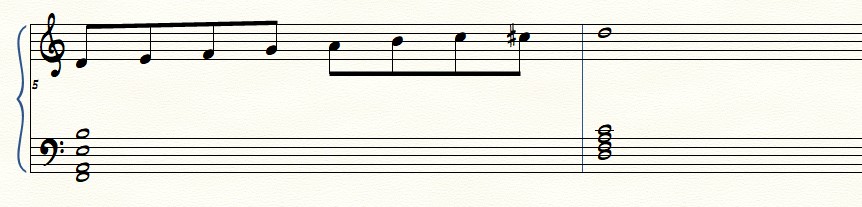
Note that the scale degrees are | 1-2-b3-4-5-6-b7-7-8 |

Some points where they work great is over the ii7 and IVmaj7(#11) chords in the key.  However, experimentation is encouraged, as this is just a jumping point to start from.  Also, building creative lines using the bebop scale should NOT use EVERY SINGLE note.  Add space.

Thank you so much for taking the time to read! Feel free to comment, share, and subscribe for more daily tips below! Till next time.
Tip #38 – Minor Bebop Scale Uses

These series of posts are going to cover bebop scales and possible uses – so let’s jump right in.

As a quick refresher: the bebop era of jazz grew from the trends taking place during the 1930’s in the United States, but didn’t become fully developed and established till the 1940’s.  During improvisation, some players would use the convenience of these “bebop scales,” which were no more than diatonic scales with a single added chromatic passing tone in-between to push chordal tones on downbeats.

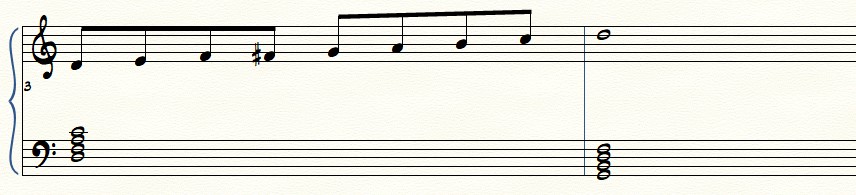
So, now let’s take a look at the minor bebop scale:

Note that the scale degrees are | 1-2-b3-3-4-5-6-b7-8 |

Some points where they work great is over the ii7 and V7 chords in the key.  However, experimentation is encouraged, as this is just a jumping point to start from.  Also, building creative lines using the bebop scale should NOT use EVERY SINGLE note.  Add space.

Thank you so much for taking the time to read! Feel free to comment, share, and subscribe for more daily tips below! Till next time.

Tip #37 – Dominant Bebop Scale Uses

These series of posts are going to cover bebop scales and possible uses – so let’s jump right in.

As a quick refresher: the bebop era of jazz grew from the trends taking place during the 1930’s in the United States, but didn’t become fully developed and established till the 1940’s.  During improvisation, some players would use the convenience of these “bebop scales,” which were no more than diatonic scales with a single added chromatic passing tone in-between to push chordal tones on downbeats.

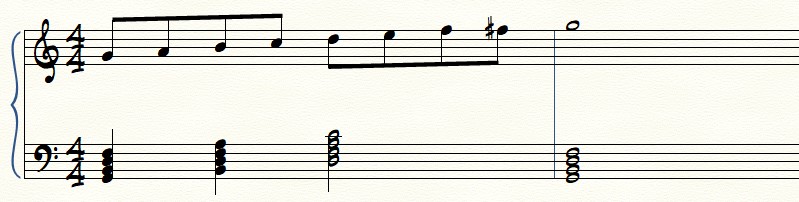
So, now let’s take a look at the dominant bebop scale:

Note that the scale degrees are | 1-2-3-4-5-6-b7-7-8 |

The dominant bebop scale can work great over V7, ii7, and vii7(b5) chords in the key. Also, ii – V progressions as well! However, experimentation is encouraged, as this is just a jumping point to start from.  Also, building creative lines using the bebop scale should NOT use EVERY SINGLE note.  Add space.

Thank you so much for taking the time to read! Feel free to comment, share, and subscribe for more daily tips below! Till next time.

Tip #23 – Finding a Good Modal/Synthetic Cadence

Today is a small tip on how to use your ears and basic knowledge of voice-leading when it comes to building a cadential sound when in a tonal mode – or using a synthetic scale.

First, know where is your tonal center, or I chord. This will obviously be your home base.

Now, find scale degrees that can act as sol/5 or ti/7 to the root of the scale.

Next, find other leading tones and see if they can be added to the previous incomplete V structure.

Finally, experiment with these tones, adding and subtracting, to build a cadential chord that has a strong pull back to your I chord with an unresolved sound. Easier said than done, for sure, but this exercise will certainly train your ears more to know how your compositions flows within a mode or synthetic scale.

Thank you so much for taking the time to read! Feel free to comment, share, and subscribe for more daily tips below! Till next time.

Tip #5 – Finding the Right Chords for your Phrygian-Dominant Scale

Or vice versa! Maybe you already have the chordal harmony, but are looking to see if playing a lead line over in a phrygian-dominant mode is appropriate.

The phrygian-dominant scale is a mode based off of starting from the fifth degree of the harmonic minor scale. So, to remind, a harmonic minor scale looks as such:

And if you were to start from the fifth degree, it would not look like this, becoming the phrygian-dominant scale:

Notice that the scale degrees are | 1 b2 3 4 5 b6 b7 1 | and what chords can be derived from them. The strongest chords built when playing in this mode are:

Harmonic movements between I – bII , and I – bvii are good indicators to the ear that you have now dove into the world of phrygian-dominant.

In the case that you are in a regular major/minor kay, but want to incorporate the phrygian-dominant, look to add chords like: 7alt , 7(b9b13) , V7/III , and V7/VI . These best fit the pitch collection of the mode. Also, a VImaj7 chord can possibly work if the melody has a raised sixth being approached from above.


Thank you so much for taking the time to read! Feel free to comment, share, and subscribe for more daily tips below! Till next time.