Tip #42 – Harmonic Minor Bebop Scale Uses

These series of posts are going to cover bebop scales and possible uses – so let’s jump right in.

As a quick refresher: the bebop era of jazz grew from the trends taking place during the 1930’s in the United States, but didn’t become fully developed and established till the 1940’s.  During improvisation, some players would use the convenience of these “bebop scales,” which were no more than diatonic scales with a single added chromatic passing tone in-between to push chordal tones on downbeats.

So, now let’s take a look at the harmonic minor bebop scale:
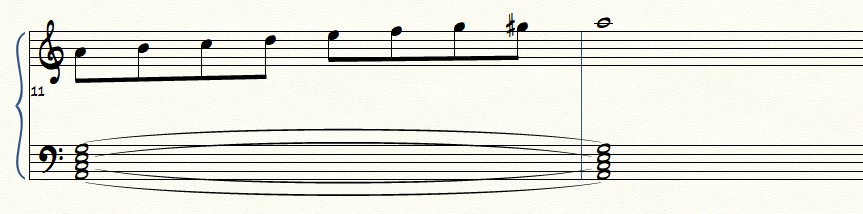
Note that the scale degrees are | 1-2-b3-4-5-b6-b7-7-8 |

Some points where they work great is over the vi7 chord in the key.  However, experimentation is encouraged, as this is just a jumping point to start from.  Also, building creative lines using the bebop scale should NOT use EVERY SINGLE note.  Add space.

Thank you so much for taking the time to read! Feel free to comment, share, and subscribe for more daily tips below! Till next time.

Tip #41 – Melodic Minor Bebop Scale Uses

These series of posts are going to cover bebop scales and possible uses – so let’s jump right in.

As a quick refresher: the bebop era of jazz grew from the trends taking place during the 1930’s in the United States, but didn’t become fully developed and established till the 1940’s.  During improvisation, some players would use the convenience of these “bebop scales,” which were no more than diatonic scales with a single added chromatic passing tone in-between to push chordal tones on downbeats.

So, now let’s take a look at the melodic minor bebop scale:

Note that the scale degrees are | 1-2-b3-4-5-#5-6-7-8 |

Some points where they work great is over the ii7 and vii7(b5) chords in the key.  However, experimentation is encouraged, as this is just a jumping point to start from.  Also, building creative lines using the bebop scale should NOT use EVERY SINGLE note.  Add space.

Thank you so much for taking the time to read! Feel free to comment, share, and subscribe for more daily tips below! Till next time.
Tip #40 – Major Bebop Scale Uses

These series of posts are going to cover bebop scales and possible uses – so let’s jump right in.

As a quick refresher: the bebop era of jazz grew from the trends taking place during the 1930’s in the United States, but didn’t become fully developed and established till the 1940’s.  During improvisation, some players would use the convenience of these “bebop scales,” which were no more than diatonic scales with a single added chromatic passing tone in-between to push chordal tones on downbeats.

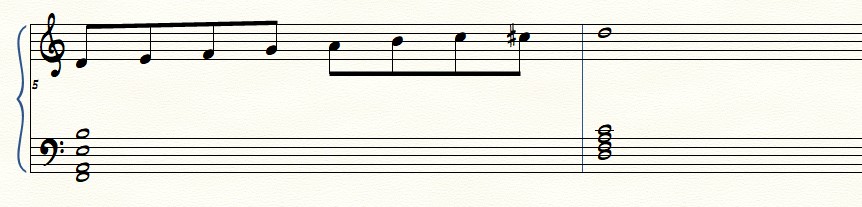
So, now let’s take a look at the major bebop scale:

Note that the scale degrees are | 1-2-3-4-5-#5-6-7-8 |

Some points where they work great is over the I6 and Imaj7 chords in the key.  However, experimentation is encouraged, as this is just a jumping point to start from.  Also, building creative lines using the bebop scale should NOT use EVERY SINGLE note.  Add space.

Thank you so much for taking the time to read! Feel free to comment, share, and subscribe for more daily tips below! Till next time.
Tip #39 – Dorian Bebop Scale Uses

These series of posts are going to cover bebop scales and possible uses – so let’s jump right in.

As a quick refresher: the bebop era of jazz grew from the trends taking place during the 1930’s in the United States, but didn’t become fully developed and established till the 1940’s.  During improvisation, some players would use the convenience of these “bebop scales,” which were no more than diatonic scales with a single added chromatic passing tone in-between to push chordal tones on downbeats.

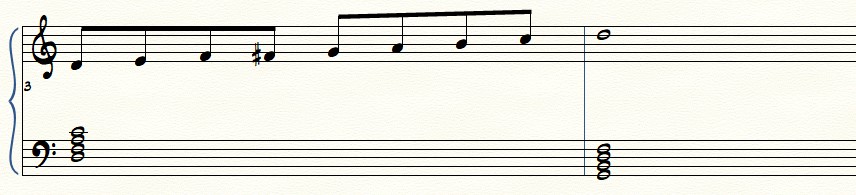
So, now let’s take a look at the dorian bebop scale:

Note that the scale degrees are | 1-2-b3-4-5-6-b7-7-8 |

Some points where they work great is over the ii7 and IVmaj7(#11) chords in the key.  However, experimentation is encouraged, as this is just a jumping point to start from.  Also, building creative lines using the bebop scale should NOT use EVERY SINGLE note.  Add space.

Thank you so much for taking the time to read! Feel free to comment, share, and subscribe for more daily tips below! Till next time.
Tip #38 – Minor Bebop Scale Uses

These series of posts are going to cover bebop scales and possible uses – so let’s jump right in.

As a quick refresher: the bebop era of jazz grew from the trends taking place during the 1930’s in the United States, but didn’t become fully developed and established till the 1940’s.  During improvisation, some players would use the convenience of these “bebop scales,” which were no more than diatonic scales with a single added chromatic passing tone in-between to push chordal tones on downbeats.

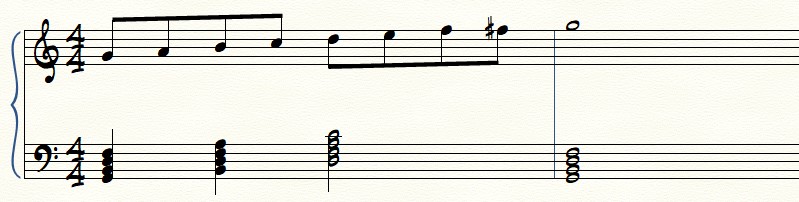
So, now let’s take a look at the minor bebop scale:

Note that the scale degrees are | 1-2-b3-3-4-5-6-b7-8 |

Some points where they work great is over the ii7 and V7 chords in the key.  However, experimentation is encouraged, as this is just a jumping point to start from.  Also, building creative lines using the bebop scale should NOT use EVERY SINGLE note.  Add space.

Thank you so much for taking the time to read! Feel free to comment, share, and subscribe for more daily tips below! Till next time.

Tip #37 – Dominant Bebop Scale Uses

These series of posts are going to cover bebop scales and possible uses – so let’s jump right in.

As a quick refresher: the bebop era of jazz grew from the trends taking place during the 1930’s in the United States, but didn’t become fully developed and established till the 1940’s.  During improvisation, some players would use the convenience of these “bebop scales,” which were no more than diatonic scales with a single added chromatic passing tone in-between to push chordal tones on downbeats.

So, now let’s take a look at the dominant bebop scale:

Note that the scale degrees are | 1-2-3-4-5-6-b7-7-8 |

The dominant bebop scale can work great over V7, ii7, and vii7(b5) chords in the key. Also, ii – V progressions as well! However, experimentation is encouraged, as this is just a jumping point to start from.  Also, building creative lines using the bebop scale should NOT use EVERY SINGLE note.  Add space.

Thank you so much for taking the time to read! Feel free to comment, share, and subscribe for more daily tips below! Till next time.

How To Beat Writer’s Block – Tip #4

Here is another tip of finding inspiration and beating writer’s block – and it comes from a source of distraction, too!:


In this modern world, social media has taken over. While it can be argued that society has benefited from this advance in instant communication through technology, one could also propose a counterstance saying that social media has led to distraction, unfulfillment, anxiety, and more. But let’s safe that topic for outside of music.


Today, I will be discussing an opportunity for using social media as an inspiration that can be done as you are endlessly scrolling.
Start by taking a random tweet, Facebook status updates, or Instagram caption and find one of two things:

  1. A topic
  2. A small phrase

Concerning the first one – simply write a song that is about or tangent to the focus of the post. Nothing complex about that; and maybe too, the perspective of the person who wrote it could be the vision of the character in the song – or at least the mood of the piece in general. With the latter choice, pick s small phrase that stand out to you and make a repetitive motif out of it. The motif can be a symbolic representation of it, or it can be a directly related to the spoken rhythm & pitch contour of the phrase.
Experiment with both and see what you create.

Thank you so much for taking the time to read! Feel free to comment, share, and subscribe for more daily tips below! Till next time.

Teach Yourself Music Theory – 8.) General Guide to Understanding Tempo Markings

Before, we have only talked about how a written piece of music indicates to the performer the pitch frequencies to play, and at what rhythmic patterns to play them at. However, we have not discussed how composers indicate at what speed to play the piece at.

That is why composers include (most of the time – unless they want it to remain ambiguous) tempo, speed, markings at the top of the page.

The general format is that a composer would indicate a unit of rhythmic value (i.e. quarter-note, dotted eighth-note, half-note, etc.) and set it equal to a specific Beats Per Minute ratio amount. In other words, “quarter-note equals 120” mean that the piece will be played at a tempo where 120 quarter-note pulses will occur over a minute’s duration of time.

By default, usually the quarter-note is the tempo unit if not directly indicated. Or, look for the beat unit in the time signature for more clues.

On occasion, the composer might tell the tempo character by just giving an Italian word for it. Here is the general guide to understanding them:


Thank you so much for taking the time to read! Feel free to comment, share, and subscribe for more daily tips below! Till next time.

Tip #36 – Two Different Kinds of Grounds

In music, a ground is a recurring motif found in the lowest voice possible. Here are two variations of grounds that you can use:

1- Ground motif, where the bass motif is repeated and varied with each reiteration to fit a harmonic or melodic structure.

2- Basso Ostinato, where the bass motif is repeated, but the voices above feature variation with each repeat.

Thank you so much for taking the time to read! Feel free to comment, share, and subscribe for more daily tips below! Till next time.

Tip #35 – Incorporating Double Canons into Works

Before explaining how to build a double canon into a work of music, one needs to know the definition of one.

Simply, it is when two canons (including their own pair of leader and follower) are played at the same time.

Similarly, when there are three different unique canons playing at the same time, it is called a triple canon; and so on, and so on.

Try building one canon. Once that is done, find out what best compliments the two running melodic lines. Next, get creative with the second canon while keeping in mind how each part sound to one another.

Thank you so much for taking the time to read! Feel free to comment, share, and subscribe for more daily tips below! Till next time.