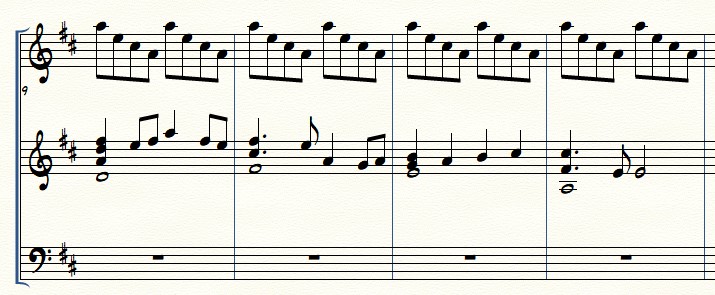
Two-Part Density, as we have talked about before, is two different melodic lines (either in counterpoint or in compliment to each other) played together at the same time.
For those that are nitpicky about everything that they write, here is a way to look at your two-part density in mindful reflection of what note to choose.
First, are the two notes chord-tones to the harmony (either the root, third, fifth, or seventh) or tension tones? Mixture of both?
Second, do the harmonic intervals between the two melodic lines give the desired effect?:
- Unions – overlapping consonant blend
- Seconds – dissonant
- Thirds – consonant, especially if it is a chord-tone
- Perfect Fourth – hollow, and slightly dissonant
- Perfect Fifth – hollow, consonant
- Tritone – very dissonant
- Sixths – consonant, especially if it is a chord-tone
- Sevenths – dissonant, but can work well if it is a chord tone
Being conscious of these two ideas of chord-tones and interval effect can help strengthen your two-part density writing.
Thank you so much for taking the time to read! Feel free to comment, share, and subscribe for more daily tips below! Till next time.







 Daily Music Writing Tips - Blog by Bryan M. Waring