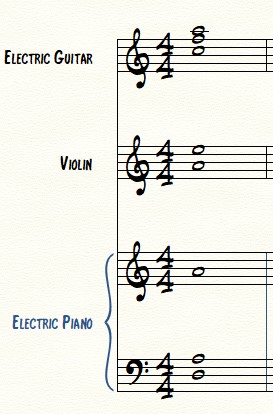
Tailgating on the idea of being limited to a three-part harmony; you are going to have to make some choices if you want the sound of a dominant chord, but can only voice three notes.
To remind: a dominant chord is a major triad with a b7 interval above it (and is usually decorated with extra upper extensions as well as tension tones).
So…
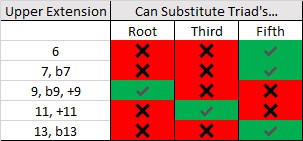
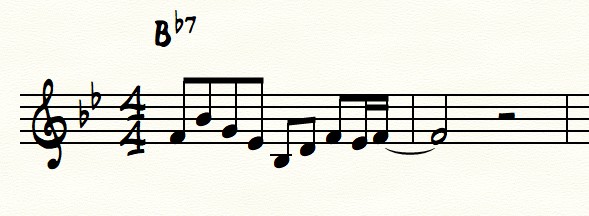
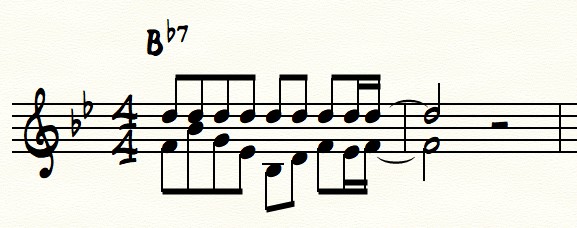
Whenever the root, 9, b9, #9, 11, +11, 13, or b13 is in the melody – support it with the 3rd and b7th of the chord underneath it.
Whenever the 3rd or 5th is in the melody of the dominant chord – support it with the b7th, and the remaining 5th or 3rd.
Whenever the b7th is in the melody – support it with the 3rd and 5th underneath it.
Whenever there is an alternation or substitution in the dominant chord – keep it, but make sure the distance between the two upper notes is not a m2.
And more so…
Keep this in mind as you plan how to do a harmonic arrangement and support of your musical work.
Thank you so much for taking the time to read! Feel free to comment, share, and subscribe for more daily tips below! Till next time.


 Daily Music Writing Tips - Blog by Bryan M. Waring