These series of posts are going to cover bebop scales and
possible uses – so let’s jump right in.
As a quick refresher: the bebop era of jazz grew from the
trends taking place during the 1930’s in the United States, but didn’t become
fully developed and established till the 1940’s. During improvisation, some players would use
the convenience of these “bebop scales,” which were no more than diatonic
scales with a single added chromatic passing tone in-between to push chordal
tones on downbeats.
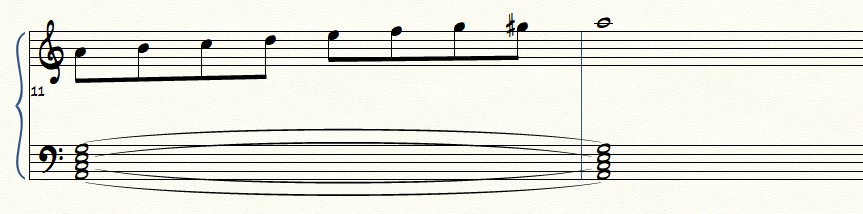
So, now let’s take a look at the harmonic minor bebop scale:
Note that the scale degrees are | 1-2-b3-4-5-b6-b7-7-8 |
Some points where they work great is over the vi7 chord in the key. However, experimentation is encouraged, as this is just a jumping point to start from. Also, building creative lines using the bebop scale should NOT use EVERY SINGLE note. Add space.
Thank you so much for taking the time to read! Feel free to comment, share, and subscribe for more daily tips below! Till next time.
These series of posts are going to cover bebop scales and
possible uses – so let’s jump right in.
As a quick refresher: the bebop era of jazz grew from the
trends taking place during the 1930’s in the United States, but didn’t become
fully developed and established till the 1940’s. During improvisation, some players would use
the convenience of these “bebop scales,” which were no more than diatonic
scales with a single added chromatic passing tone in-between to push chordal
tones on downbeats.
So, now let’s take a look at the melodic minor bebop scale:
Note that the scale degrees are | 1-2-b3-4-5-#5-6-7-8 |
Some points where they work great is over the ii7 and vii7(b5) chords in the key. However, experimentation is encouraged, as this is just a jumping point to start from. Also, building creative lines using the bebop scale should NOT use EVERY SINGLE note. Add space.
Thank you so much for taking the time to read! Feel free to comment, share, and subscribe for more daily tips below! Till next time.
These series of posts are going to cover bebop scales and
possible uses – so let’s jump right in.
As a quick refresher: the bebop era of jazz grew from the
trends taking place during the 1930’s in the United States, but didn’t become
fully developed and established till the 1940’s. During improvisation, some players would use
the convenience of these “bebop scales,” which were no more than diatonic
scales with a single added chromatic passing tone in-between to push chordal
tones on downbeats.
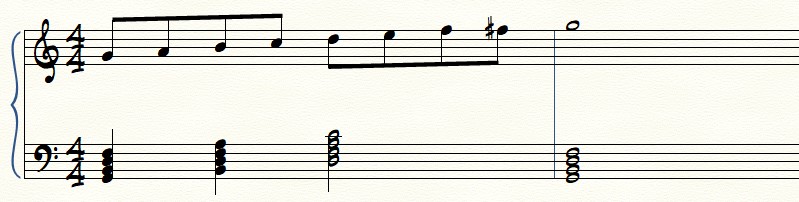
So, now let’s take a look at the major bebop scale:
Note that the scale degrees are | 1-2-3-4-5-#5-6-7-8 |
Some points where they work great is over the I6 and Imaj7 chords in the key. However, experimentation is encouraged, as this is just a jumping point to start from. Also, building creative lines using the bebop scale should NOT use EVERY SINGLE note. Add space.
Thank you so much for taking the time to read! Feel free to comment, share, and subscribe for more daily tips below! Till next time.
These series of posts are going to cover bebop scales and
possible uses – so let’s jump right in.
As a quick refresher: the bebop era of jazz grew from the
trends taking place during the 1930’s in the United States, but didn’t become
fully developed and established till the 1940’s. During improvisation, some players would use
the convenience of these “bebop scales,” which were no more than diatonic
scales with a single added chromatic passing tone in-between to push chordal
tones on downbeats.
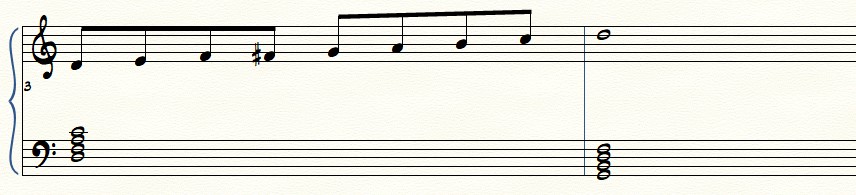
So, now let’s take a look at the dorian bebop scale:
Note that the scale degrees are | 1-2-b3-4-5-6-b7-7-8 |
Some points where they work great is over the ii7 and IVmaj7(#11) chords in the key. However, experimentation is encouraged, as this is just a jumping point to start from. Also, building creative lines using the bebop scale should NOT use EVERY SINGLE note. Add space.
Thank you so much for taking the time to read! Feel free to comment, share, and subscribe for more daily tips below! Till next time.
These series of posts are going to cover bebop scales and
possible uses – so let’s jump right in.
As a quick refresher: the bebop era of jazz grew from the
trends taking place during the 1930’s in the United States, but didn’t become
fully developed and established till the 1940’s. During improvisation, some players would use
the convenience of these “bebop scales,” which were no more than diatonic
scales with a single added chromatic passing tone in-between to push chordal
tones on downbeats.
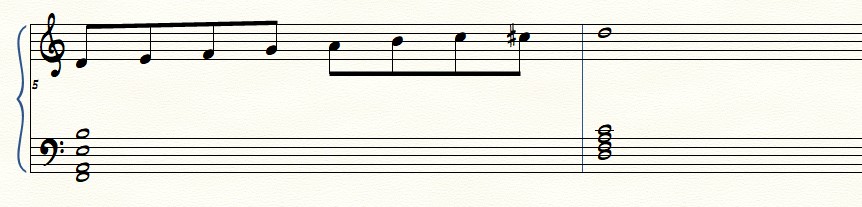
So, now let’s take a look at the minor bebop scale:
Note that the scale degrees are | 1-2-b3-3-4-5-6-b7-8 |
Some points where they work great is over the ii7 and V7 chords in the key. However, experimentation is encouraged, as this is just a jumping point to start from. Also, building creative lines using the bebop scale should NOT use EVERY SINGLE note. Add space.
Thank you so much for taking the time to read! Feel free to comment, share, and subscribe for more daily tips below! Till next time.
These series of posts are going to cover bebop scales and
possible uses – so let’s jump right in.
As a quick refresher: the bebop era of jazz grew from the trends taking place during the 1930’s in the United States, but didn’t become fully developed and established till the 1940’s. During improvisation, some players would use the convenience of these “bebop scales,” which were no more than diatonic scales with a single added chromatic passing tone in-between to push chordal tones on downbeats.
So, now let’s take a look at the dominant bebop scale:
Note that the scale degrees are | 1-2-3-4-5-6-b7-7-8 |
The dominant bebop scale can work great over V7, ii7, and vii7(b5) chords in the key. Also, ii – V progressions as well! However, experimentation is encouraged, as this is just a jumping point to start from. Also, building creative lines using the bebop scale should NOT use EVERY SINGLE note. Add space.
Thank you so much for taking the time to read! Feel free to
comment, share, and subscribe for more daily tips below! Till next time.
Here is another tip of finding inspiration and beating writer’s block – and it comes from a source of distraction, too!:
In this modern world, social media has taken over. While it can be argued that society has benefited from this advance in instant communication through technology, one could also propose a counterstance saying that social media has led to distraction, unfulfillment, anxiety, and more. But let’s safe that topic for outside of music.
Today, I will be discussing an opportunity for using social media as an inspiration that can be done as you are endlessly scrolling. Start by taking a random tweet, Facebook status updates, or Instagram caption and find one of two things:
A topic
A small phrase
Concerning the first one – simply write a song that is about or tangent to the focus of the post. Nothing complex about that; and maybe too, the perspective of the person who wrote it could be the vision of the character in the song – or at least the mood of the piece in general. With the latter choice, pick s small phrase that stand out to you and make a repetitive motif out of it. The motif can be a symbolic representation of it, or it can be a directly related to the spoken rhythm & pitch contour of the phrase. Experiment with both and see what you create.
Thank you so much for taking the time to read! Feel free to comment, share, and subscribe for more daily tips below! Till next time.
I’ve been to many colleges – for my actual undergrad, study abroad, visiting, continuation into grad – and I’ve seen many patterns when it comes to the mentality of people who enjoy music going for a degree in one.
The first main division are the entering mindsets. More often than not, most seem enter into the belief that “music is easy and I like music, so therefore this will be an easy degree despite spending thousands of dollars for a piece of paper to prove I enjoy music.” And as they begin their first week, they realize that the academics are much tougher than what they thought they were to be. Some will drop out at that point, change studies, or become discouraged in pursuing music in general.
Then, there is the opposite end of the spectrum where the people that enter college are aware that this will be a tough endeavor, but are willing to invest the time an money that comes with college to improve skills.
But regardless, going to college for an arts degree – especially in music – is a risk. If you are doing it for anything besides music education, music therapy, conducting, business, law, and (maybe) music composition – it is a waste… unfortunately.
For one, this paper you get on graduation day that says you know how to play an instrument does not guarantee a job – and no degree in any other field will. What is more tough on the performing artist is that their job look is dependent on their output quality; such as in the fields of: performing, networking, releasing of recordings, gigs, etc. And unfortunately, like any school system, teachers will gladly pass a student by grade-wise without correcting the problem to develop their skill.
College does have some benefits; like assisting in getting performing opportunities, student teaching, developing music theory/composition knowledge… but this is minimal to the kid striving to be a performing artist.
Basically, I believe the stigma mentality that “EVERYONE must go to college after high school graduation” must be dismantled and considered on a case-by-case basis. If you understand the risks of investing into a college education, but are going for a degree in teaching music, therapy, conducting, business, law, or theory – it is wise to do so. Otherwise, take the money that you would invest for college and do this instead:
Seek out professional players for lessons (which will be at a discounted rate than what you would pay at college)
Use time that would have been used writing papers to watch videos online on how improving skills, to network, to start a band, etc.
Before, we have only talked about how a written piece of music indicates to the performer the pitch frequencies to play, and at what rhythmic patterns to play them at. However, we have not discussed how composers indicate at what speed to play the piece at.
That is why composers include (most of the time – unless they want it to remain ambiguous) tempo, speed, markings at the top of the page.
The general format is that a composer would indicate a unit of rhythmic value (i.e. quarter-note, dotted eighth-note, half-note, etc.) and set it equal to a specific Beats Per Minute ratio amount. In other words, “quarter-note equals 120” mean that the piece will be played at a tempo where 120 quarter-note pulses will occur over a minute’s duration of time.
By default, usually the quarter-note is the tempo unit if not directly indicated. Or, look for the beat unit in the time signature for more clues.
On occasion, the composer might tell the tempo character by just giving an Italian word for it. Here is the general guide to understanding them:
Thank you so much for taking the time to read! Feel free to comment, share, and subscribe for more daily tips below! Till next time.





 Daily Music Writing Tips - Blog by Bryan M. Waring