Tip #51 – Framing with an 8-Bar Blues

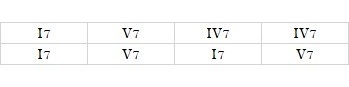
Continuing with the topic of blues, there is an other option – an abridged version – of the 12-bar blues structure. In the progressive development of rock music in the 50’s and 60’s, many artists began writing songs using the commonly available blues chords and harmonic movement… but in a short 8 measure cycle.

Below are some various harmonic progressions that are commonly found in sounds that are built off of the 8-bar blues structure:

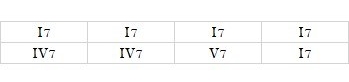
Once again, this is just a beginning frame. You can most certainly experiment with substituting chords and changing other factors. Like how an artists needs a canvas to first structure their genius, so does a composer.


Thank you so much for taking the time to read! Feel free to comment, share, and subscribe for more daily tips below! Till next time.
Tip #50 – Framing with a 12-Bar Blues

Maybe you have already heard the term “12-bar blues” before. On the other hand, maybe not. Anyways, as a little tip: you can use the 12-bar blues form as a beginning step to form the structure and harmonic progression of you musical composition.

The reason why it is called 12-bar blues is because… it takes place over 12 bars of measures and is commonly found in the blues style. Shocking, I know.

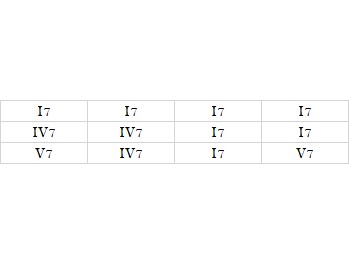
Below is the most common use form and harmonic progression of the 12-bar blues. Notice how each of the chords in the measure spaces are dominant chords, regardless as to if they are the I, IV, or V of the key.

Once again, this is just a beginning frame. You can most certainly experiment with substituting chords and changing other factors. Like how an artists needs a canvas to first structure their genius, so does a composer.


Thank you so much for taking the time to read! Feel free to comment, share, and subscribe for more daily tips below! Till next time.

Thinking Out Loud – When To Abandon A Teacher?

Education is the most powerful tool out there. With it, a person can advance forwards with new skills and creative mindsets to tackle any problem or to create something unimaginable. Without it, the poison of ignorance will set-in and cripple the abilities of mankind.

For musicians, and just about anyone looking to go into the field of music one way or another, a mentor/teacher is desired to get things going. To get those cogs and wheels turning. To help stable your wings as you prepare for flight…

But what do you do when your teacher does not do that? What if, in you deep gut feeling, that you sincerely believe that the time spent “learning” has really been wasted – covering material that has no beneficial impact on you? Can you abandon your teacher?

In most areas, education is not free – and where it is, at say a public library or internet, may not offer the same catered relationship as of a mentor with their student. That being said, good money being put into education should have good teachings coming out. But what does one do when they sincerely know that things can be better?

On one hand, you should be grateful and humble that a person who is supposedly more successful is willing to share their expertise. They are your elder and have more experience than you. However, at the same time, they are probably not a splitting image of your true idol that you wish to follow in the footsteps of – and it you feel as if nothing is being learned, then other opportunities should be pursued.

Of course, some self-reflection must be take into account. Is the reason that noting is being learned the teacher’s fault, or the student? Ultimately, how can one change – and if the teacher is the root of the problem, how can you leave an educational resource?

Just thinking out loud.

Tip #49 – Bending Through a Melody With Blue Notes

Let’s start by answering a question that you probably had: “What is a blue note?”

And the answer is actually not set in stone… because there are two alternating definitions of “blue notes.”

The first definition comes from the idea of what scale degrees are changed from a major scale to a regular minor blues scale. Those would be the:

| b3 – b5 – b7 |

So, by this first definition, anything out of the ordinary from the major scale of the key that acts as a flattened-3rd, 5th, or 7th scale degree qualifies as a “blue note.”

The other definition goes smaller, into quarter-tones. This states that blue notes are even further out of tune with the standard major scale, being quarter-tones apart (either higher or lower in pitch) from the said flattened-3rd, 5th, or 7th scale degrees.

If the instrument you are writing for has the capability of hitting quarter-tones (with bends, slides, tunings, etc.), play around with incorporating those notes from around the flattened-3rd, 5th, or 7th scale degrees. If not, just use the simpler definition of blue notes to achieve a bluesy sound.


Thank you so much for taking the time to read! Feel free to comment, share, and subscribe for more daily tips below! Till next time.

Tip #48 – Using the Mock Blues Scale

Incorporating this mock blues scale, while interesting, is like being sold by a gimmicky infomercial. However, it is worth talking about.

Basically it would be something like this:

HEY THERE!! ARE YOU A COMPOSER THAT USES THE MAJOR SCALE A LOT? DON’T YOU WANT SOMETHING MORE INTERESTING OUT OF LIFE? CAN’T HELP YOU THERE TO CURE THE BLUES, BUT BOY CAN I SHOW YOU HOW TO CHANGE YOUR OLD MAJOR SCALE INTO SOMETHING NEW! SOMETHING TRUE! SOMETHING BLUE!! WITH THESE THREE EASY PAYMENTS OF LOWERED SCALE DEGREES, YOU TOO CAN HAVE THIS BLUES SOUND!

(end scene)

So, what I’m getting at is that to build a mock blues scale, take a major scale and lower the same degrees found in the blue scales. That would give you the scale degrees of:

| 1 – 2 – b3 – 4 – b5 – 6 – b7 – 1 |

With it, the original melody would transform as such:

Which can either work really well… or poorly. Either way, it is still an option for interest with any composer.


Thank you so much for taking the time to read! Feel free to comment, share, and subscribe for more daily tips below! Till next time.

Tip #47 – Working the Major Blues Scale and Replacements

In a previous post, I talked about the idea of using the minor blues scale over a harmonic progression. Now, what if I told you that there was a major blues scale version? What kind of melodic treatment would be used over the harmonic progression f you decided to take that route with a major blues scale?

A major blues scale is like the minor blues, but starts on the flattened-3rd scale degree of the minor blues. So, the new scale degrees become:

| 1 – 2 – b3 – 3 – 5 – 6 – 1 |

And they work great of major triadic or dominant chords!

However, it should be noted that unlike the minor blues scale, the root is based of the chord, NOT the key. So, using a blues chord progression in A Major, the root of the scale would change with each sounding chord.

By now you must be thinking: “But wait! If the major blues scale is determined by the chord and not the key… and the major blues scale is a ‘mode’ – essentially, of the minor blues that is determined by the key, can’t different versions of the minor blues scale work? As so, being dependent on the chord?”

While it is not in common practice, it sure works! To use these replacement blues scales, take the original major blues scale and start on the 6th scale degree to get the minor blues version:

As mentioned above, this is not typical practice of the blues, but it does offer interesting variety for sure! Experiment around with it!


Thank you so much for taking the time to read! Feel free to comment, share, and subscribe for more daily tips below! Till next time.

Tip #46 – Adding the Minor Blues Scale

Say you have a cool harmonic progression and what a “bluesy-sounding” melody. Where do you start? Do you go right to bending certain pitches to create “blue notes;” do you use stock licks from your favorite artists that emulated a blues style; do you throw in flattened scale degrees…?

Today we are going to talk about achieving the “blues” sound over a harmonic progression by using the minor blues scale in the melody.

First of all, the minor blues scale is made up of the following scale degrees:

| 1 – b3 – 4 – #4 – 5 – b7 – 1 |

Next, the root is based on the key of the chord progression, NOT the chord itself. In the example below, while the key signature is not defined, one can assume that based on the harmonic progression that the composition is in the key of A Major. Knowing that, a person should use the A minor blues scale over each of the chords.

This may look weird on paper, having a flatted-3rd over a major/dominant chord figure – but take a listen to it! With the lowered scale degree, it certainly sounds out of place, but in fact bluesy! Of course, these are still tension tones (including the #4 scale degree) and should be treated with good resolution… or not, you are the composer!


Thank you so much for taking the time to read! Feel free to comment, share, and subscribe for more daily tips below! Till next time.

Tip #45 – Locrian Bebop Scale Uses

These series of posts are going to cover bebop scales and possible uses – so let’s jump right in.

As a quick refresher: the bebop era of jazz grew from the trends taking place during the 1930’s in the United States, but didn’t become fully developed and established till the 1940’s.  During improvisation, some players would use the convenience of these “bebop scales,” which were no more than diatonic scales with a single added chromatic passing tone in-between to push chordal tones on downbeats.

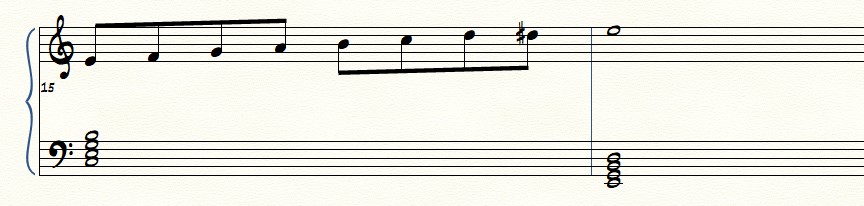
So, now let’s take a look at the locrian bebop scale:

Note that the scale degrees are | 1-b2–b3-4-b5-b6-b7-7-8 |

Some points where they work great is over the vii7(b5) and V7 chords in the key.  However, experimentation is encouraged, as this is just a jumping point to start from.  Also, building creative lines using the bebop scale should NOT use EVERY SINGLE note.  Add space.

Thank you so much for taking the time to read! Feel free to comment, share, and subscribe for more daily tips below! Till next time.
Tip #44 – Phrygian Bebop Scale Uses

These series of posts are going to cover bebop scales and possible uses – so let’s jump right in.

As a quick refresher: the bebop era of jazz grew from the trends taking place during the 1930’s in the United States, but didn’t become fully developed and established till the 1940’s.  During improvisation, some players would use the convenience of these “bebop scales,” which were no more than diatonic scales with a single added chromatic passing tone in-between to push chordal tones on downbeats.

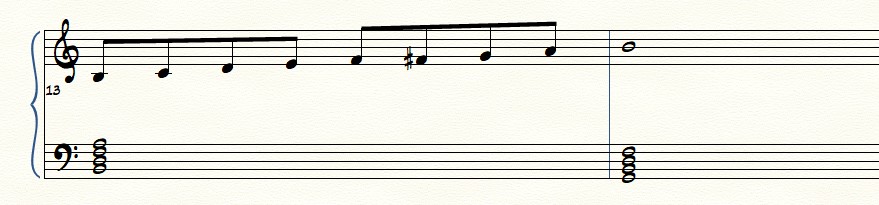
So, now let’s take a look at the phrygian bebop scale:

Note that the scale degrees are | 1-b2-b3-4-5-b6-b7-7-8 |

Some points where they work great is over the iii7 and Imaj7 chords in the key.  However, experimentation is encouraged, as this is just a jumping point to start from.  Also, building creative lines using the bebop scale should NOT use EVERY SINGLE note.  Add space.

Thank you so much for taking the time to read! Feel free to comment, share, and subscribe for more daily tips below! Till next time.
Tip #43 – Half-Diminished Bebop Scale Uses

These series of posts are going to cover bebop scales and possible uses – so let’s jump right in.

As a quick refresher: the bebop era of jazz grew from the trends taking place during the 1930’s in the United States, but didn’t become fully developed and established till the 1940’s.  During improvisation, some players would use the convenience of these “bebop scales,” which were no more than diatonic scales with a single added chromatic passing tone in-between to push chordal tones on downbeats.

So, now let’s take a look at the half-diminished bebop scale:

Note that the scale degrees are | 1-b2–b3-4-b5-5-b6-b7-8 |

Some points where they work great is over the vii7(b5) and V7 chords in the key.  However, experimentation is encouraged, as this is just a jumping point to start from.  Also, building creative lines using the bebop scale should NOT use EVERY SINGLE note.  Add space.

Thank you so much for taking the time to read! Feel free to comment, share, and subscribe for more daily tips below! Till next time.