Tip #226 – Starting a Critique Journal

While this tip isn’t a compositional tip exactly, it can help with your compositional skills.

With all the compositional skills you acquire and use, be sure to reflect on it. Evaluate it. Did what you do help the composition, or did it hurt it? Does a skill apply better to a different kind of musical work or genre more than another? Did it work well, but maybe another variable made the outcome not-so-good? If you did something new and creative, how will be able to do it again?

By starting a “Critique Journal” you can look back at all the compositional skills that you have gained and see what works well for your next piece. Constant honest evaluation of yourself will refine your skills and help make your workflow for writing better – because now you have solidified in your mind on what works and what doesn’t thought the journal.

Try it out. Get a journal made of recycled paper or make one on your laptop/phone. With every piece you start to write, jot down a few notes of what could be better or what is already amazing.

Thank you so much for taking the time to read! Feel free to comment, share, and subscribe for more daily tips below! Till next time.

Tip #225 – To Resolve In or Out

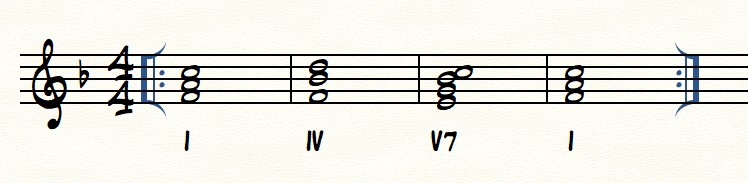
Say your song is based off of a group chords on repeat.  Do you have you progression resolve within the loop…

…or outside the loop…

…or does it really matter?  Do the two options really make a difference?

While one can argue that they don’t, there is a difference in motion between the two.  When you resolve within the loop, you have a return to “home” and completion.  Think of this like picking up a book, coming to an ending, and then picking up a new story.

As for when you resolve outside the loop, your momentum is continuous because the resolution takes place on the start of a new loop.  This is like reading a book then ends off with a “To Be Continued” cliff-hanger to lead into the next book.

Experiment with the two and see which feels right for your piece.

Thank you so much for taking the time to read! Feel free to comment, share, and subscribe for more daily tips below! Till next time.

Mix and Master Yourself – Quick Mix Guide (Part 8)

Have you every been in a situation where you want an effect to happen in one section of your musical piece, but not in another? Or maybe you want to control the parameter? Maybe you want the dry (unaffected) signal to occur in the first half of the chorus and then to gradually become wetter (processed, effected) towards the end.

The simple solution, and end to the quick mix guide, is to add automation.

Simply, automation is having the DAW change a parameter without you having to physically do it as the piece is being played back through the speakers.

If you are unfamiliar with where in your DAW you can access automation, I advise that you do so. Once you are able to, play around and see what cool things you can come up with!

Thank you so much for taking the time to read! Feel free to comment, share, and subscribe for more daily tips below! Till next time.
Tip #224 – Using sus2 and sus4 Chords for Surprises

This is going to be a quick little informative tip:

In the past, we have talked about how the use of power chords can create ambiguity between the key possibilities because there is no third voiced to tell if it is major or minor.

In a similar fashion, using your tonic (or at least opening chord) as a sus4 or sus2 chord that gives you a “triadic” harmony without the third present can also aid in creating that key signature ambiguity while giving the harmony some color with the suspended notes.

Try using it as a tonic chord and experiment as to how you can resolve it in surprising ways.

Thank you so much for taking the time to read! Feel free to comment, share, and subscribe for more daily tips below! Till next time.
Tip #223 – Understanding the Gangeyabhushani Scale

The Carnatic music of South India has 72 scales (melakartas) comprised of seven different notes in either an ascending (arohana) or descending (avarohana) fashion. These scales are used in a kind of India music called rāga and are extremely beautiful. In addition these scales are grouped into different chakras, based on certain similarities.

Today’s melakarta is the Gangeyabhushani scale, the third scale from the sixth chakra.

Below is a representation of the scale as if it was put into Western notation:

Both the first (SA) and fifth (PA) scale degrees are in a placement normal to most scales found in Western music, but now you have a raised second degree (RI) acting as an augmented second from the root.  In addition, you have the leading tone back to the root.

Try playing around with the scale, possible harmonies, and progressions!

Thank you so much for taking the time to read! Feel free to comment, share, and subscribe for more daily tips below! Till next time.

Tip #222 – Sound Effects in Songs

This is going to be a quick tip.

Besides thinking that your music should be constrained to just instruments, why not incorpoarate sounds that would be typically used for sound effects?

This can help give your song more of a “story-like” or epic quality.

Thank you so much for taking the time to read! Feel free to comment, share, and subscribe for more daily tips below! Till next time.

Mix and Master Yourself – Quick Mix Guide (Part 7)

Gearing towards the end of your mixing process, you’ll want to start adding your own unique touches – if you haven’t started already.

While mixing involves cleaning-up the sound, balancing, and placing instruments within the sonic environment, it also involves playing with effects loops.

Previously, we have talked about compressors, EQs, reverbs, and delays. However, there are so much more. From chorus, to flanger, phaser, distortion, etc., there is a multitude of ways on adding a person flavor to it.

Get familiar with the sounds of the effects and see which compliments the artistic vision of the piece. It may be one, none, or all! Also, be sure to get acquainted with the effect’s parameters to know the different knob controls. Above all else, experiment and gave fun!

Thank you so much for taking the time to read! Feel free to comment, share, and subscribe for more daily tips below! Till next time.

Tip #221 – About a Line Cliché

What is a line cliché and is it really a cliché?

Commonly found in jazz music, a line cliché is…

  • A line moving between relatively stagnant chord harmonies
  • Either ascending or descending
  • Going chromatically (more typical) or diatonic
  • Staying at the bottom, top, or in the middle of the harmony
  • Usually the root, fifth, sixth, or seventh of the harmony

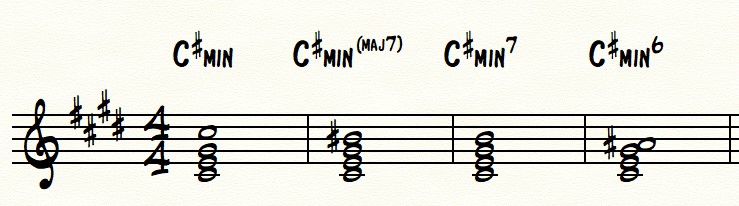
An example would be like such:

We have talked about these before in previous posts, especially with inner lines movements between harmonic changes.

Thank you so much for taking the time to read! Feel free to comment, share, and subscribe for more daily tips below! Till next time.

Mix and Master Yourself – Quick Mix Guide (Part 6)

One you got your levels ready with the faders, instruments panned to their locations, filters applied, dynamic processors inserted, and tone shaped with the EQ… you can move onto the next step of adding reverb and delays.

Both reverb and delays are time-based processors that create echo-like effects of the signal. By creating and delaying the reflections of a sound, you can make it appear further back.

Think about it like this: imagine a person speaking to you up close versus very far away. They sound different because of how long it take for the initial sound the reach the ears as well as the following reflections from the space around it. Reverb and delays create artificial reflections to trick the mind that a sound source is father away than what it seems.

The purpose of using these time-based processors is to give some distance between the instruments. Just like panning was done to spread apart the different sounds, so can reverb and delay.

Thank you so much for taking the time to read! Feel free to comment, share, and subscribe for more daily tips below! Till next time.

Tip #220 – Tresillo Pattern

One way of incorporating some rhythmic interest in your piece is to use a tresillo pattern.

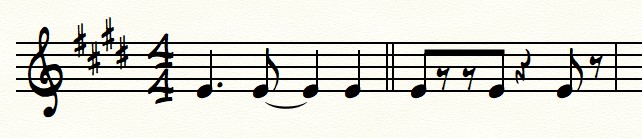
Basically, think of it as trying to take the 8 eighth-notes in a 4/4 measure and trying to divide it evenly into 3’s.  Without the use of triplets, it is near to impossible.  So, what you would have to end up doing is group the first couple of notes into 3’s while the last two are grouped into their own.  This creates a forward motion based on the unstable/uneven rhythm.  It would look something like this:

Notice how this looks very similar to the “3-side” of the classic Cuban clave figure – that’s because it is.

Use it as a repeated figure or as an interjected figure.

Thank you so much for taking the time to read! Feel free to comment, share, and subscribe for more daily tips below! Till next time.