Tip #19 – Evading A Cadence

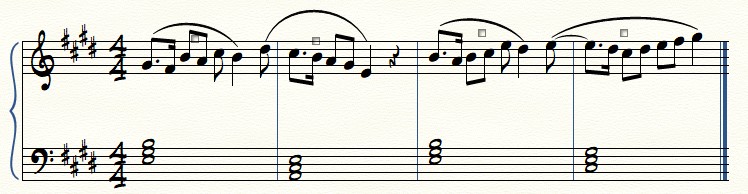
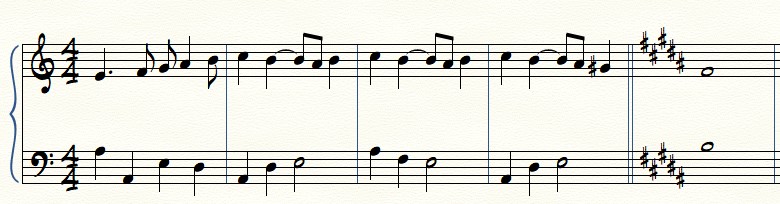
Take a look at this cadential figure below:

We can tell that this piece is in the key of a minor and uses a V – i ending. Now, let’s lessen the strength of this ending with an evaded cadence.

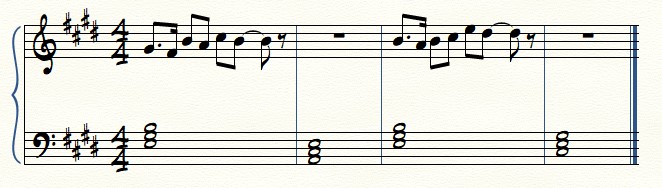
In an evaded cadence, extra measures are added to dilute the ending structure, and more likely than not, the motion is creatively headed into a new key area.

In the edit above, a few more measures of the penultimate measure were repeated and varied. Then, the harmonic motion was turned from a V – i ending in the key of a minor, to a IV – I plagal cadence in the key of B Major.


Thank you so much for taking the time to read! Feel free to comment, share, and subscribe for more daily tips below! Till next time.
Tip #18 – Implying A Cadence

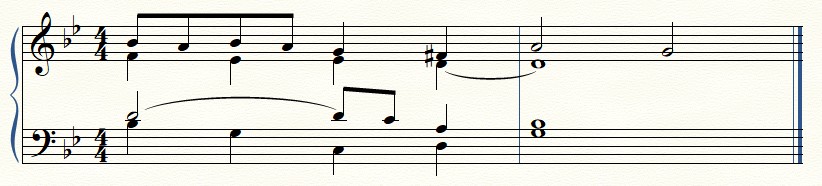
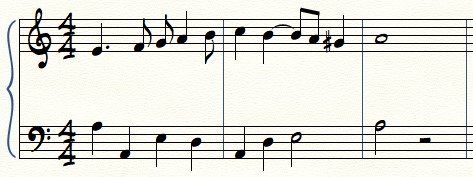
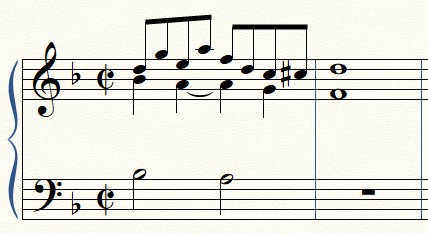
Look at this example below:

We can see a lot of things from this; in particular, we have some cadential motion going on with a raised C# to D in the key of d minor. Also, there is an F underneath the D which make up an i chord of Dm. Plus, there is an A bass root in the pervious bar which act as a V to i cadence.

But there really isn’t a root motion of V to i at all with the bass note missing. Yet, if performed, we do hear this as a cadence.

Point I’m getting at: sometimes even with the removal of “the floor beneath” you can still imply a cadence. While it is certainly not as strong as a perfect authentic cadence in full, it might be the weak cadence you are looking for.


Thank you so much for taking the time to read! Feel free to comment, share, and subscribe for more daily tips below! Till next time.
Tip #17 – Ways To Milk The End

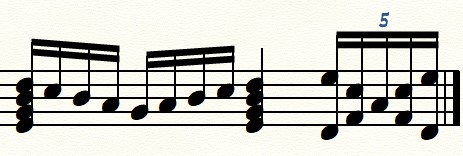
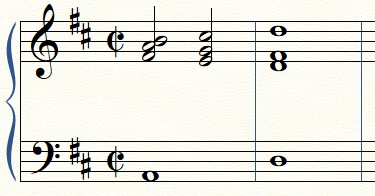
While one option is to end with a cadence that is short & sweet (or even to the short-end extreme of abrupt/without-warning), another is to milk it for as long as possible. Take a cadential phrase like this:

Even though a simple way is to stretch it out with some prolongation of the tones, there are more creative ways.

Commonly found in classical music, the cadential chord can receive some treatment of reiteration in different inversions, vertical structures, voicings, registers, etc.

Another way to lengthen the end is to arpeggiate the chord out:


Thank you so much for taking the time to read! Feel free to comment, share, and subscribe for more daily tips below! Till next time.
Tip #16 – Suppress an Ending with an Elided Cadence Maneuver

Continuing on the topic of lessening the impact of a cadential figure in order to maintain a sense of flow while signaling to the listener the termination of a phrase, we are going to look at the use of an elided cadence.

Think about using an elided cadence as crossing the finish line – but still continuing to run. It occurs in music when a new phrase begins before or at the same time as the cadential chord that is just about to close the previous musical idea.

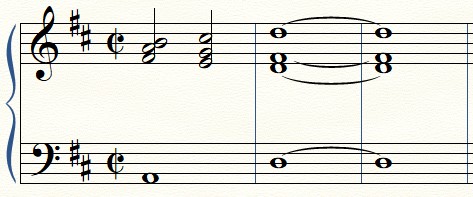
Here is the tail-end of a musical phrase with the cadence happening on beat one and stopping right there in its tracks:

To lessen the sudden impact of the stop in motion, try having a voice start a new phrase. It could look something like this:

This gives the flow of being together, but at the same time being two different recognizable ideas.


Thank you so much for taking the time to read! Feel free to comment, share, and subscribe for more daily tips below! Till next time.
Teach Yourself Music Theory – 4.) Accidentals (Which Are No Accident)

Sometimes when looking at a score, you might have noticed an odd looking symbol next on the left side of the note head, which is the oval part of a note. These symbols are called accidentals, and they modify the notated pitch.

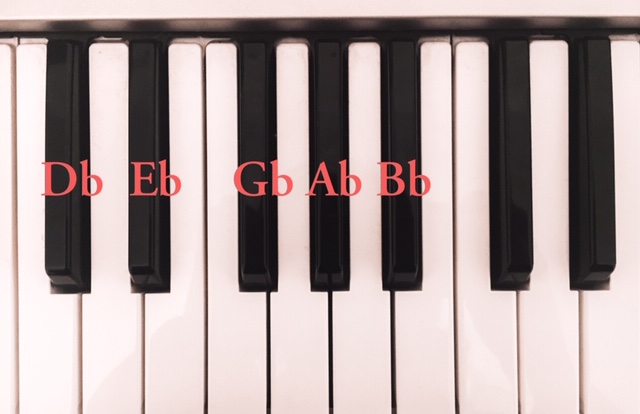
The first is the sharp, which looks like a (#) and tells the performer to raise the pitch up to the next closest pitch. Remember those black keys on the keyboard? Well, we can finally give them names as such:

After that is the flat, which looks like a (b) and tells the performer to lower the pitch down to the next closest pitch. So those black keys would also have these names in place, too:

But wait. The G# is in the same spot as an Ab, and a B# is where C already is? Is this possible?? Indeed it is, and we call this an enharmonic, when there are two or more names for a pitch.

Now in some extreme cases, you might see a double-sharp, which looks like an (x) and tells to raise up two consecutive pitches; and a double-flat, which looks like a (bb) and likewise tells to lower down two consecutive pitches. So Ebb is an enharmonic of a D.

To wipe the slate clean and tell that a letter name should be back in the original white key space, use a natural sign as seen last in the first picture above.


Thank you so much for taking the time to read! Feel free to comment, share, and subscribe for more daily tips below! Till next time.
Tip #15 – Colors in a Delayed Cadence

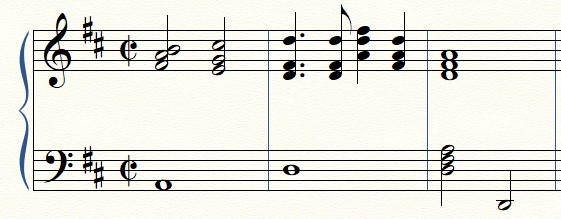
In a world where perfection is held high, imperfection can & should shine just as bright with its own uniqueness. Modern academics in composition teach how to write perfect cadential figures, but they should not be look as an end-all-be-all as how to conclude a musical idea.

Beautiful colors can bleed into the holes of a cadential phrase by delaying the resolution of a voice (usually the melody) with a suspension or appoggiatura. Eventually, it will resolve on a weaker beat, but the goal is to land on a tone not typically found in the cadential chord.


Thank you so much for taking the time to read! Feel free to comment, share, and subscribe for more daily tips below! Till next time.
Tip #14 – Softening an Ending with a Shifted Cadence

When nearing the end of a phrase or musical idea, a cadence is in order to signify to the listener that we have reached a point of conclusion in some way shape or form. However, a composer way wish that the cadence not be so drastic – in the necessity to have a continuation of motion.

So how does a composer acoustically signal the end, but do it in a sophisticated way to allow the flow to continue – like a yellow light at a traffic stop?

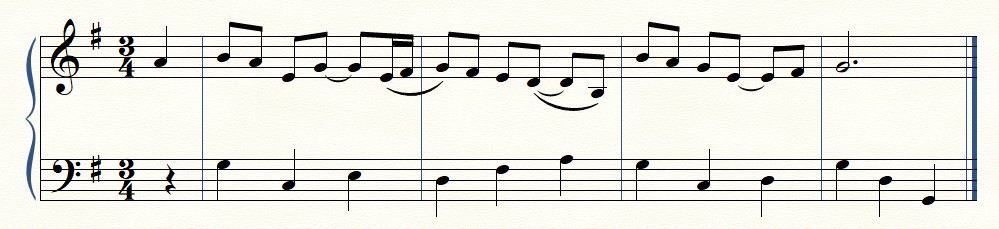
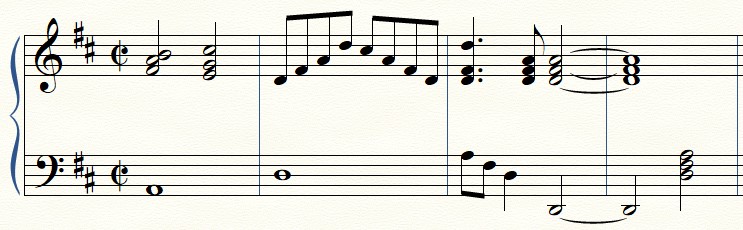
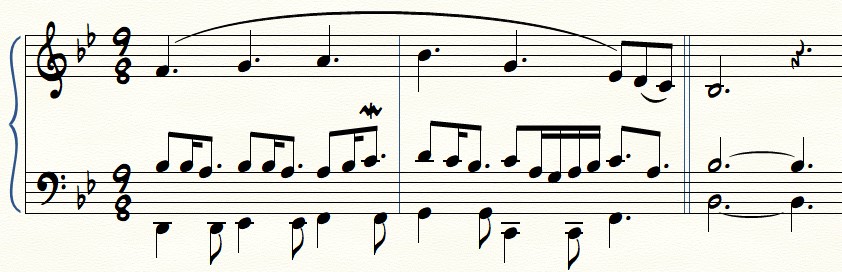
For compositions that feature an anacrusis, or pick-up measure, a shifted cadence can work to their benefit by working off the already shifted phrasing. Take a look at an example that cadences at the strong beat 1, coming to an ultimate conclusion:

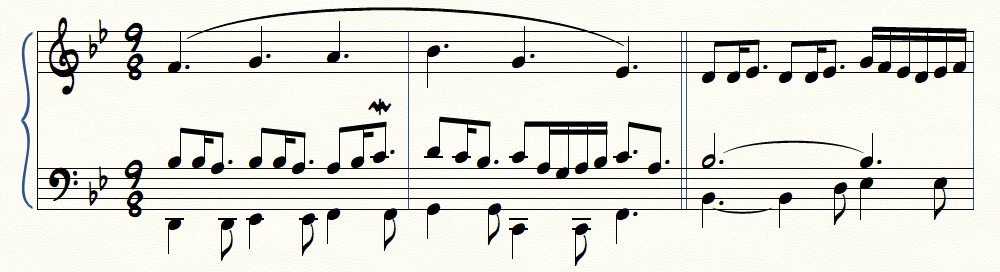
There is nothing wrong with this, but we can improve the ending by shifting it to a weaker part of the beat to essentially “lessen the blow” of the cadential figure – thus, maintaining an element of continuity to the flow of music to progress further without an abrupt stop. Here is a possible edit:

Notice that the cadence is now on beat three, which in 3/4 time is the weakest part of the measure grouping.


Thank you so much for taking the time to read! Feel free to comment, share, and subscribe for more daily tips below! Till next time.
Teach Yourself Music Theory – 3.) Naming Pitch Registers Correctly

To start off, take a look at the grand staff with all the different pitches notated. While they are all different with their placement vertically on the staff – heck, some utilize ledger lines, those extra lines above/below the staves – all of those pitches do have something in common: they are all C. That means this collection of pitches are in the same pitch class, or notes that are octave-related and have the same letter name.

Left to Right: C1, C2, C3, C4, C4 (repeated), C5, C6, C7

Remembered how we numbered pitches before from left to right on a keyboard, which is how we got C4 to be middle C? This is the act for naming registers. Starting with the first C and naming it C1, everything above and below the consecutive C is in the 1 category for their letter name. And this continues on and on. Any pitches before C1 will be numbered with a 0.

So, if I was to write a G between C4 and C5 vertically on the grand staff, it would be called G4 because it is higher than C4, but lower than C5.

Thank you so much for taking the time to read! Feel free to comment, share, and subscribe for more daily tips below! Till next time.
Tip #13 – Workshopping the Fill

In a previous tip post, we talked about the idea of the call & response. Say, for example, you have a harmonic progression with set-in-stone musical themes that will act as a “call,” but are missing the “responses” in between:

Four ingredients to a tasteful execution of a response are: 1) space, 2) pitch, 3) rhythm, and 4) judgment.

For space, decide if the response need to occur immediately after the termination of the call, or if there can be measures of rest in between.

Aim to land on chord tones on strong beats, but don’t be afraid to add passing and chromatic pitches!

A good flow of rhythm would be to start as an anticipation on a weak part of the measure entering a stronger beat. Ending on a strong beat, too, can sound good – but that is up to the composer.

And finally, have good taste/use of economy as to what is needed and best complements he figures.

Here is a rough draft of adding “fills” to these previous blank measures:

In this case, space is tight – which means constant flow. Also, the response has its own unique shape while staying within the chordal tones. These are some nice qualities. However, there are breaks of silence between that can be abrupt. So, by incorporating an anticipating figure, and modifying the rhythm to look similar to the call, the response is workshopped into something completely better than before:


Thank you so much for taking the time to read! Feel free to comment, share, and subscribe for more daily tips below! Till next time.

Tip #12 – Pictorial Writing

Take a look at the image below:

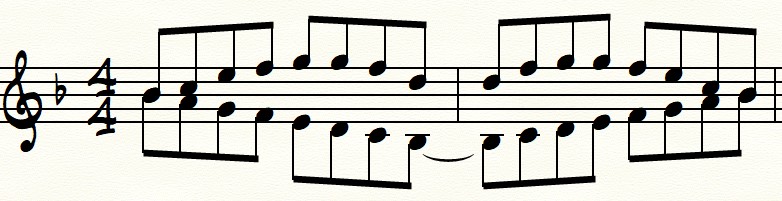
What does it look like? A pair of wings? Lips? Maybe a flatted heart? Either way, you could have probably understood right off the bat that this musical idea has more of a visual aesthetic that an acoustic kind.

While writing music in the way that you want it to sound should be a priority, there is nothing wrong with having some fun and experimenting with trying to draw pictures/shapes with the music. You never know – it might sound really could if possible to perform!

Thank you so much for taking the time to read! Feel free to comment, share, and subscribe for more daily tips below! Till next time.