Continuing from last week where we talked about counting rhythms in simple meter, let’s talk about what to do in compound meter.
As always, establish the tempo of your basic pulse/beat. This will match to be the dotted quarter-note value of the compound metered measures.
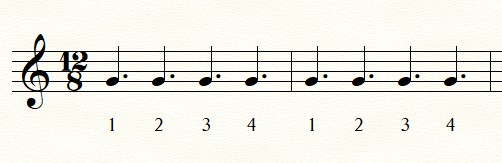
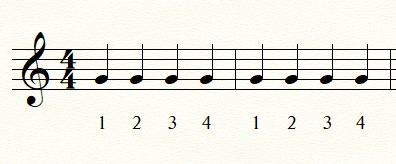
Using a compound quadruple meter type, let’s count the basic pulses. Similar to the simple meter exercise, the dotted quarter-note beats will also be counted in a repeating “1, 2, 3, 4, 1, 2, 3, 4, 1, 2, 3, 4, 1…” like the example below.
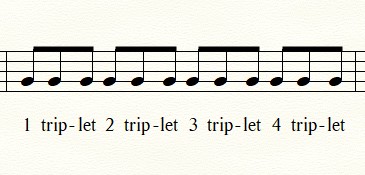
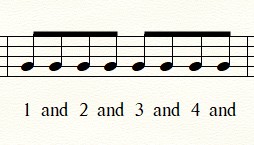
Remember how in compound meters, the beats themselves can easily be divided into threes. So, we will count these eighth-note divisions as “1, trip-, let, 2, trip-, let, 3, trip-, let, 4, trip-, let, 1…” like the example below.
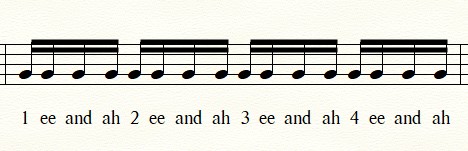
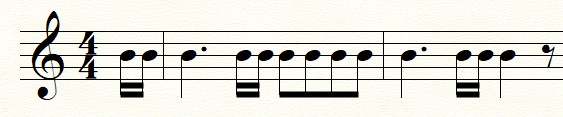
Now how about sixteenth-notes? Those will be counted like “1, ah, trip-, ah, let, ah, 2, ah, trip-, ah, let, ah, 3, ah, trip-, ah, let, ah, 4, ah, trip-, ah, let, ah, 1…” like the example below.

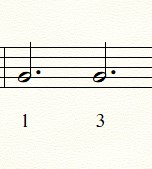
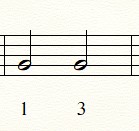
Once again, similar to what was discussed when talking about simple meters, any note value longer than the basic dotted quarter-note pulse will hold the count and omit the counts that occur during it.
Thank you so much for taking the time to read! Feel free to comment, share, and subscribe for more daily tips below! Till next time.





 Daily Music Writing Tips - Blog by Bryan M. Waring