Tip #63 – Taking Influence from Kwela Music

What is Kwela music?

It is pennywhistle-based folk music played in the streets of South Africa, playing decorated jazzy/blues-y melodic lines over a cyclical harmonic progression.

The name, “Kwela” has nothing to do with any music aspect. In fact, it is a verb from the Isizulu and African Bantu languages meaning “to climb.” Prior to this become an established music genre, it was used as jargon and also as code among kids to warn when the police was coming by. If they couldn’t hide, they would act innocent by taking out their pennywhistles and playing this lively skiffle music.

While the melody was improvised using select pitches from the blues scale, the harmonic progression was always a recurring variation of one of these three:
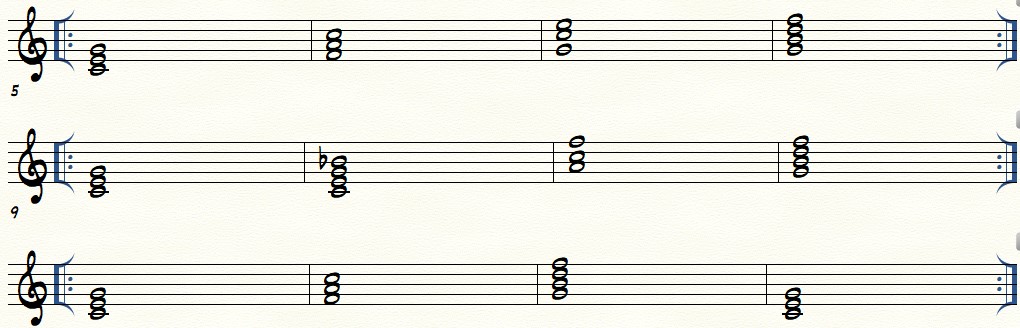
Play around with these chord progressions by having yourself record or use a DAW to playback as you improves a melody line over it.

Historically, these progressions then influenced the blues because so many South Africans had their ears tuned to the Kwela music harmonic predictability. Thus, the common 12-bar blues were adapted into these variations:

Once again, play around with these progressions to feel where and how the harmonic forces are different from the “original.”


Thank you so much for taking the time to read! Feel free to comment, share, and subscribe for more daily tips below! Till next time.


Improve Your Lyrics – Tip #2

Say you are in a group and need to get some lyrics done really quick for your next gig or recording session. What do you do? Where do you start? You have some topic ideas in mind and maybe some cool song titles, but the stress is crippling you.

Here is a step process you should use that aids in getting the work started:

  1. Imagine your concept. Begin brainstorming and come up with a word bank.
  2. Free write with no hesitation. Let this flow be your first draft.
  3. Edit what you have. Pick out lines that you like and start forming what you’ve written into stanzas.
  4. Repeat the process again, but with more focus and self-evaluation.

Seems easy as you read it, but it is an amazing process that will improve your lyric writing in a time-crunch.


Thank you so much for taking the time to read! Feel free to comment, share, and subscribe for more daily tips below! Till next time.

Tip #62 – Using the MpyƐmɔ Harmonic Progression and Scale

In some south and central African countries, musicians use homophonic multipart singing style in their songs.  That means that the group of people sing the same song rhythmically, but move in parallel motion at different pitches.  Typically, it is a fourth (interval) apart, but not always.

Below is an example of a multi-part harmonic progression called the MpyƐmɔ tribe progression from the Central African Republic as well as the derived scale. Notice how skipping every other note in the scale on the right produces the functional harmony on the left.  Also, observe the pitch fundamentals that build the harmony as well as act as a bourdon (open drone).

Besides advising you, the reader, to experiment, investigate, and take inspiration from these African harmonic progressions I strictly indorse you not to impose classical theory on these progressions.  While it is tempting to analyze these progressions with the idioms of Western music notation, I recommend not to as it takes away the purity/authenticity of African music’s own stylistic practices by framing it within a box.


Thank you so much for taking the time to read! Feel free to comment, share, and subscribe for more daily tips below! Till next time.

Tip #61 – Using the Nguni Harmonic Progression and Scale

In some south and central African countries, musicians use homophonic multipart singing style in their songs.  That means that the group of people sing the same song rhythmically, but move in parallel motion at different pitches.  Typically, it is a fourth (interval) apart, but not always.

Below is an example of a multi-part harmonic progression called the Nguni/Nyanja tribe progression from Malawi as well as the derived scale. Notice how skipping every other note in the scale on the right produces the functional harmony on the left.  Also, observe the pitch fundamentals that build the harmony as well as act as a bourdon (open drone).

Besides advising you, the reader, to experiment, investigate, and take inspiration from these African harmonic progressions I strictly indorse you not to impose classical theory on these progressions.  While it is tempting to analyze these progressions with the idioms of Western music notation, I recommend not to as it takes away the purity/authenticity of African music’s own stylistic practices by framing it within a box.


Thank you so much for taking the time to read! Feel free to comment, share, and subscribe for more daily tips below! Till next time.

Tip #60 – Using the Nkhumbi Harmonic Progression and Scale

In some south and central African countries, musicians use homophonic multipart singing style in their songs.  That means that the group of people sing the same song rhythmically, but move in parallel motion at different pitches.  Typically, it is a fourth (interval) apart, but not always.

Below is an example of a multi-part harmonic progression called the Nkhumbi/Handa tribe progression from Angola as well as the derived scale. Notice how skipping every other note in the scale on the right produces the functional harmony on the left.  Also, observe the pitch fundamentals that build the harmony as well as act as a bourdon (open drone).

Besides advising you, the reader, to experiment, investigate, and take inspiration from these African harmonic progressions I strictly indorse you not to impose classical theory on these progressions.  While it is tempting to analyze these progressions with the idioms of Western music notation, I recommend not to as it takes away the purity/authenticity of African music’s own stylistic practices by framing it within a box.


Thank you so much for taking the time to read! Feel free to comment, share, and subscribe for more daily tips below! Till next time.

Tip #59 – Using the Gogo Harmonic Progression and Scale

In some south and central African countries, musicians use homophonic multipart singing style in their songs.  That means that the group of people sing the same song rhythmically, but move in parallel motion at different pitches.  Typically, it is a fourth (interval) apart, but not always.

Below is an example of a multi-part harmonic progression called the Gogo progression from Tanzania as well as the derived scale. All from the tribe of the same name. Notice how skipping every other note in the scale on the right produces the functional harmony on the left.  Also, observe the pitch fundamentals that build the harmony as well as act as a bourdon (open drone).

Besides advising you, the reader, to experiment, investigate, and take inspiration from these African harmonic progressions I strictly indorse you not to impose classical theory on these progressions.  While it is tempting to analyze these progressions with the idioms of Western music notation, I recommend not to as it takes away the purity/authenticity of African music’s own stylistic practices by framing it within a box.


Thank you so much for taking the time to read! Feel free to comment, share, and subscribe for more daily tips below! Till next time.

Tip #58 – Using the Swazi Harmonic Progression and Scale

In some south and central African countries, musicians use homophonic multipart singing style in their songs.  That means that the group of people sing the same song rhythmically, but move in parallel motion at different pitches.  Typically, it is a fourth (interval) apart, but not always.

Below is an example of a multi-part harmonic progression called the Swazi/Nguni progression from South Africa as well as the derived scale from the tribe of the same name. Notice how skipping every other note in the scale on the right produces the functional harmony on the left.  Also, observe the pitch fundamentals that build the harmony as well as act as a bourdon (open drone).

Besides advising you, the reader, to experiment, investigate, and take inspiration from these African harmonic progressions I strictly indorse you not to impose classical theory on these progressions.  While it is tempting to analyze these progressions with the idioms of Western music notation, I recommend not to as it takes away the purity/authenticity of African music’s own stylistic practices by framing it within a box.


Thank you so much for taking the time to read! Feel free to comment, share, and subscribe for more daily tips below! Till next time.

Improve Your Lyrics – Tip #1

While some composer’s in the past, and many still do today, use another person’s poetry to set the lyrics, there is a number of singer-songwriters today that are doing both tasks. So let’s talk about some ways on how you can improve your lyrics writing.

Today will be talking about object writing using your senses.

Object writing is pretty much as the name explains: choose an object you want to focus on in your lyrics and write about it. Simple enough.

Now, try to image your senses in the process to use descriptive and detailed words about your object. Your 7 (yes, 7) senses are:

  • Sight – what you see visually
  • Auditory – what you hear acoustically
  • Smell – what you sense with your nose
  • Taste – what you sense with your tongue
  • Touch – what you feel with the outside of your body
  • Organic – what you feel inside your body (like a cramp)
  • Kinesthetic – what you feel when you are in motion

This will make your lyrics more interesting and life-like to the individual listening to your next amazing song. So give it a try!

Thank you so much for taking the time to read! Feel free to comment, share, and subscribe for more daily tips below! Till next time.

How To Beat Writer’s Block – Tip #5

Sometimes the best way to expand your creative is by doing just the opposite. By creating limits for yourself and certain parameters, one can experiment within a certain frame… instead of being intimidated by the vast openness of endless possibilities.

This tip revolves around creating the rhythm to a motific idea.

Out of all the possible pulses within the measure, limit yourself to a specific amount of pulses to accentuate. For example: in a 4/4 time signature piece of music, limit yourself to accentuating 10 of the 16 possible sixteenth-notes.

The allows you to find creative possibilities within the limits of the rules you set for yourself – and eliminates the time spent wondering “where to start first.”


Thank you so much for taking the time to read! Feel free to comment, share, and subscribe for more daily tips below! Till next time.

Tip #57 – 24 Pulse Asymmetric Time-Line Patterns and Practice

Asymmetric time-line patterns are these rhythmic patterns commonly found in Central and Western Africa.  They are intended for percussion parts of one single pitch (or at most two – we’ll discuss more of this soon).  A time-line pattern is distinguished by the number of pulses within the cyclical pattern, the number of hits, and the asymmetric grouping.

Below is the 24 pulse cycle broken in a 11+13 asymmetry.  The measures on the left show the 13 strike pattern, while the left shows the 11 strike pattern.  Notice how they complement each other.  While these patterns are intended for a single instrument, a percussion part of two distinct pitches can play these opposing patterns.

In addition, these patterns can be phased into different variations.

While these patterns are not common at all in blues music, I do challenge the creative composer to use these patterns creatively in conjunction with different stylistic combinations.


Thank you so much for taking the time to read! Feel free to comment, share, and subscribe for more daily tips below! Till next time.